Selecting a stretch wrapper is a critical decision that affects product integrity, labor costs, and material waste. With numerous models available, each for specific applications and throughput levels, understanding your operational needs is essential to making an informed choice.
This guide will help you choose the right stretch wrapper for your line. Keep reading to understand the key considerations for finding a stretch wrapping machine that aligns with your production requirements, space constraints, and budget.
Understanding Your Operational Requirements
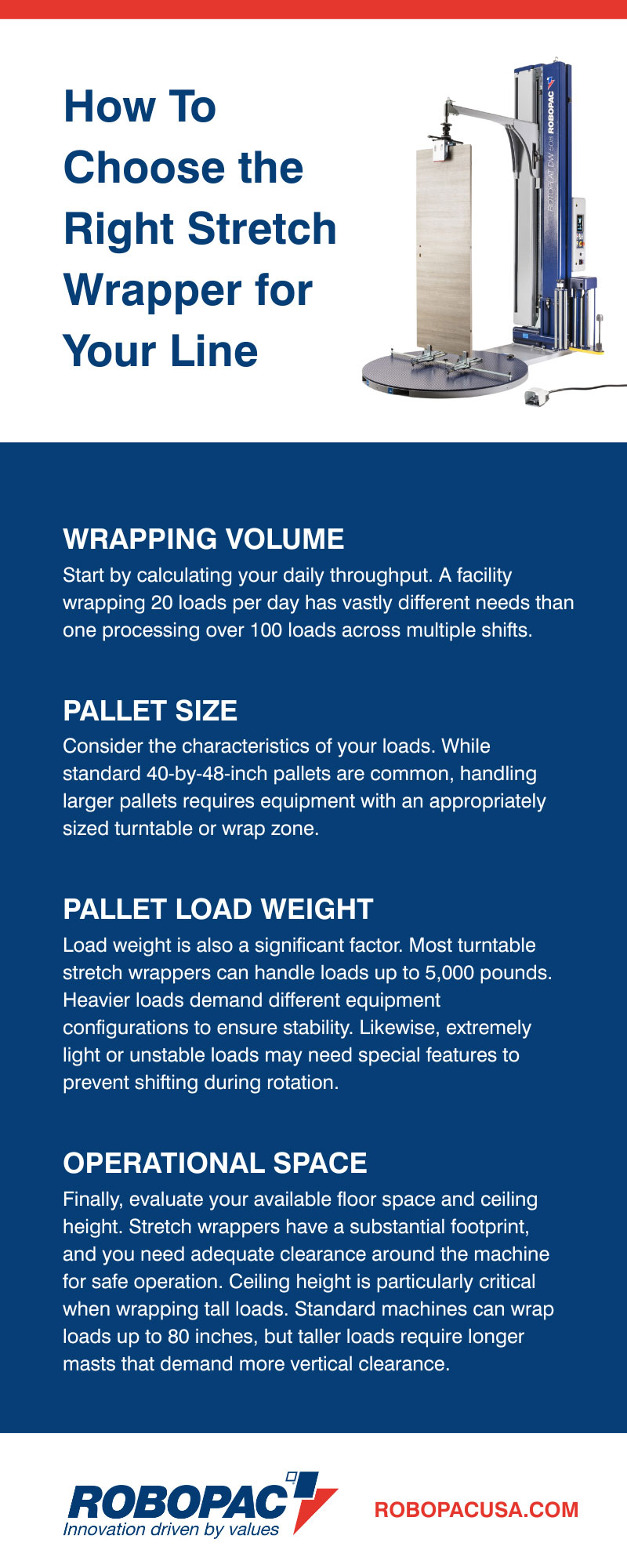
Before evaluating specific machines, assess your current packaging operation. Your operation’s wrapping throughput, the size of the pallets you need to wrap, the weight of the pallets, and your available space are all key considerations when selecting a stretch wrapping machine.
Wrapping Volume
Start by calculating your daily throughput speed. A facility wrapping 10-30 pallet loads per day has vastly different needs than one processing over 100 loads across multiple shifts.
Pallet Size
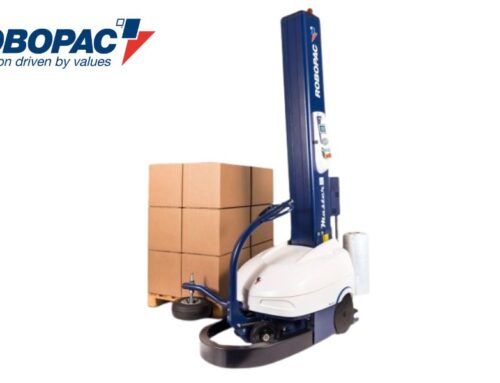
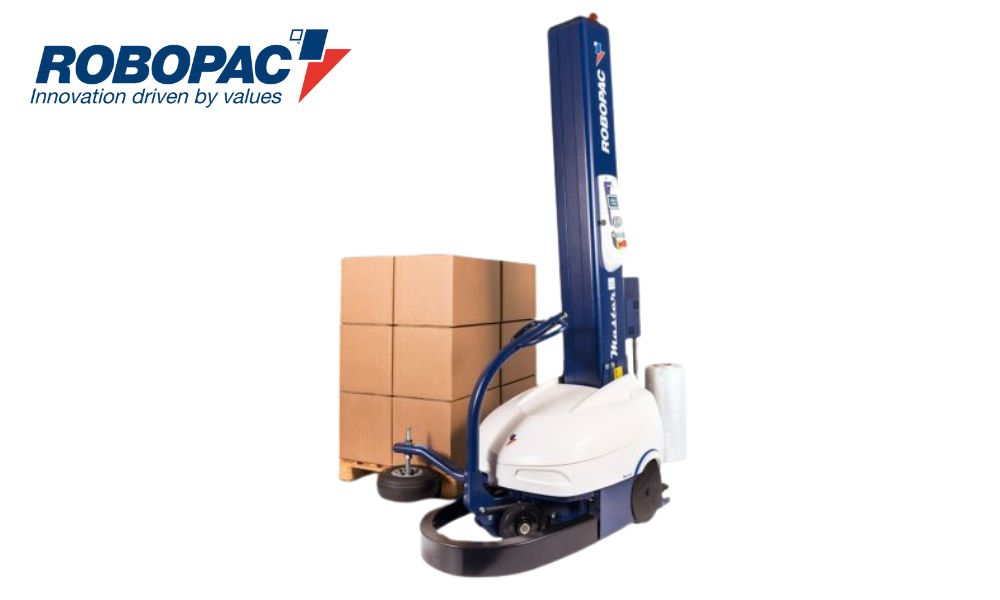
Consider the characteristics of your loads. While standard 40-by-48-inch pallets are common, handling larger pallets requires equipment with an appropriately sized turntable, rotary arm wrap zone, or a portable stretch wrapper which moves around the pallet. Portable stretch wrappers, like the Robot S7, can wrap any length, width, and weight pallet over 200 pounds.
It’s also important to know your tallest pallet load height. Most stretch wrappers come in either 86- or 100-inch wrap height.
Pallet Load Weight
Load weight is also a significant factor. Most turntable stretch wrappers can handle loads from 4,000 to 5,000 pounds. Heavier loads demand different equipment like portable stretch wrappers or rotary arm stretch wrappers which allow you to place the pallet on the floor instead of a turntable to ensure stability. Likewise, extremely light or unstable loads may need special features to prevent shifting during rotation.
Operational Space
Finally, evaluate your available floor space and ceiling height. Stretch wrappers have a designated footprint, and you need adequate clearance around the machine for safe operation. Ceiling height is particularly critical when wrapping tall loads. Standard machines can wrap loads up to 110 inches, but taller loads require longer masts that demand more vertical clearance.
Semi-Automatic Stretch Wrapper Options
A semi-automatic stretch wrap machine provides a balance between automation and operator involvement. They are ideal for operations that have outgrown manual wrapping but do not require a fully automated system. Understanding the differences between turntable and rotary arm models will help you match the equipment to your specific application.
Portable Stretch Wrappers
These battery powered machines wrap any length, width, and weight pallet load. Simply take the machine to the pallet, attach the film, and hit the start button. The portability alone can deliver 25 percent or more in productivity improvement.
Turntable Stretch Wrappers
The most common configuration of semi-automatic stretch wrappers is the turntable model. The pallet sits on a rotating platform while a film delivery system travels up and down a mast, applying stretch film.
These machines are versatile, handle most standard packaging applications, and fit well in tight spaces. For lightweight or unstable loads that might shift during rotation, look for machines with top platens, which apply downward pressure to stabilize the load during the wrap cycle.
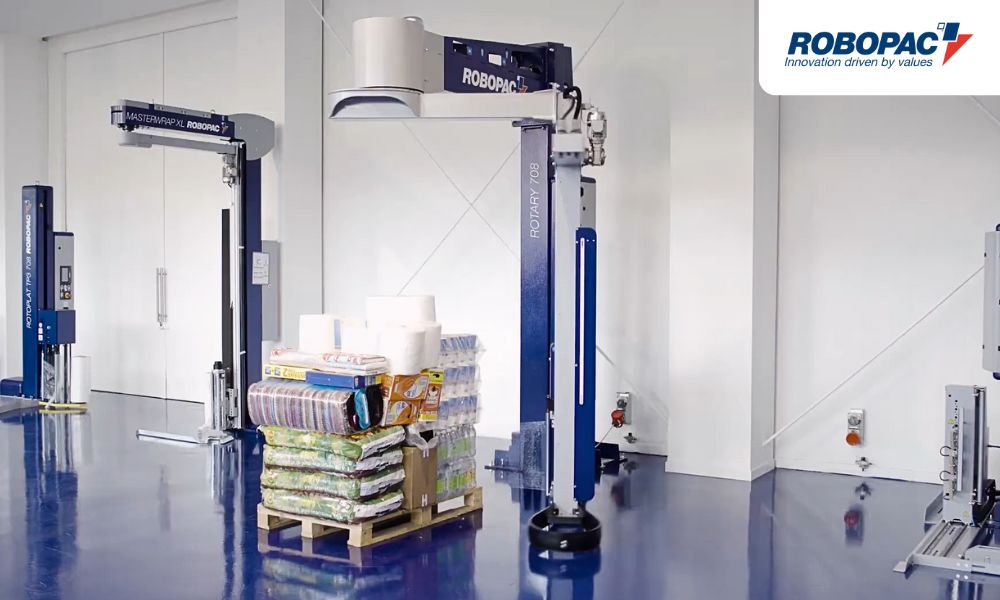
Rotary Arm Stretch Wrappers
Rotary arm wrappers keep the load stationary on the floor while a rotating arm circles the pallet to apply film. This design suits loads that cannot rotate safely, including extremely heavy pallets, unstable products, or irregularly shaped items.
These machines require more floor space than turntable models, as the arm needs clearance to move around the load. They must also anchor to the floor to handle shifting weight during operation.
Horizontal Stretch Wrappers
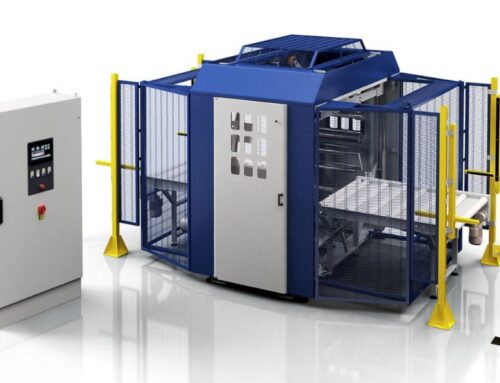
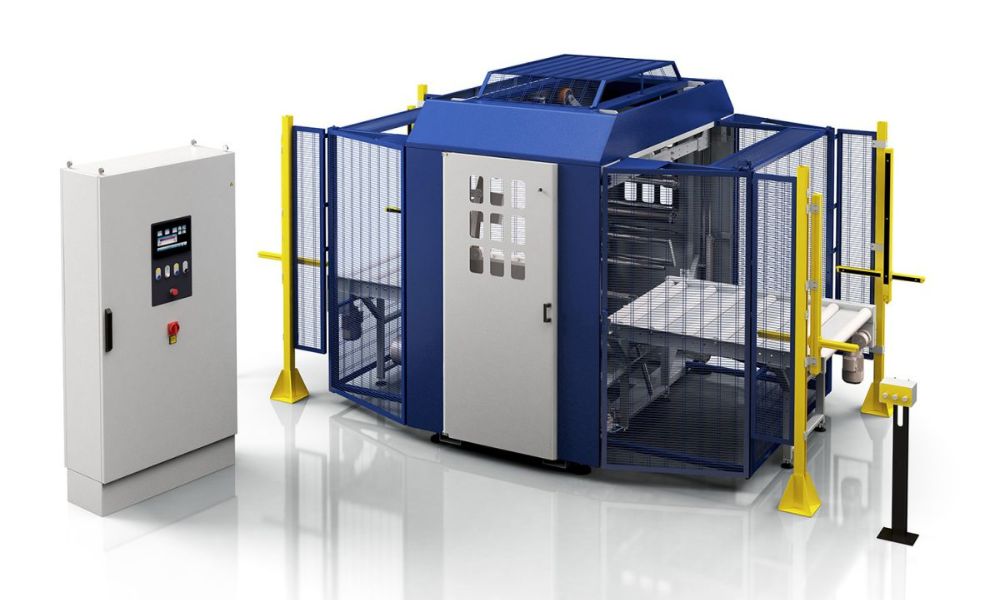
Horizontal rotating ring stretch wrappers are the most productive and safest way to wrap cabinets, lumber, doors, windows, carpets, textiles, copper piping, corrugated tubing and more.
Automatic Stretch Wrapper Considerations
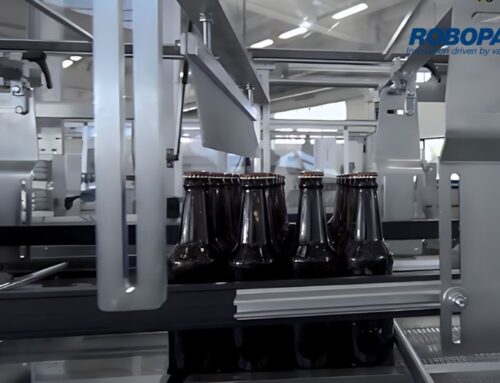
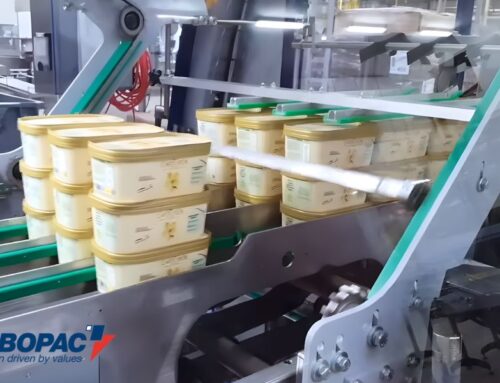
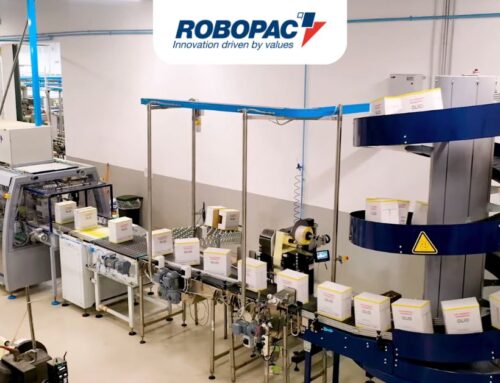
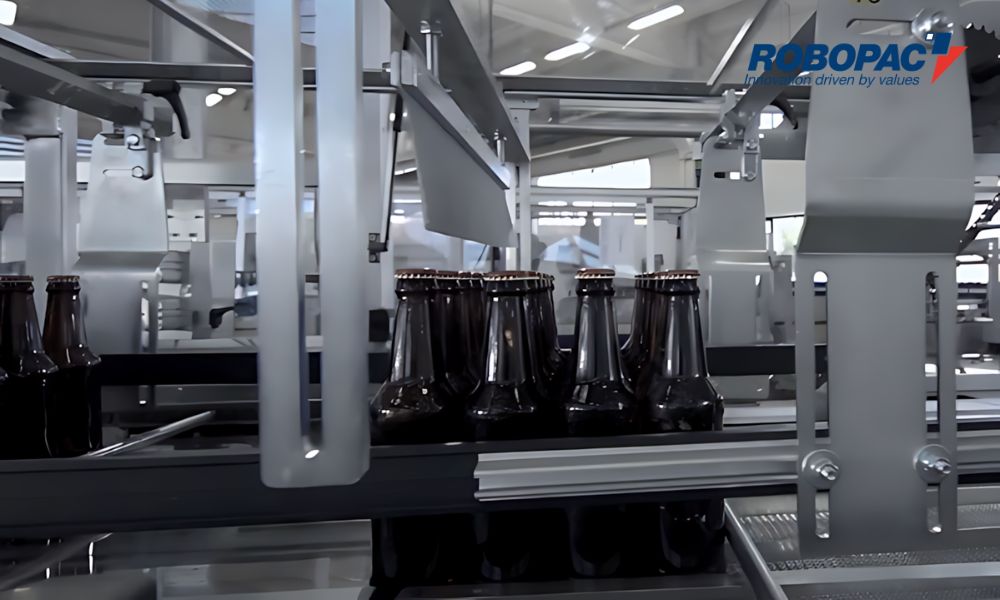
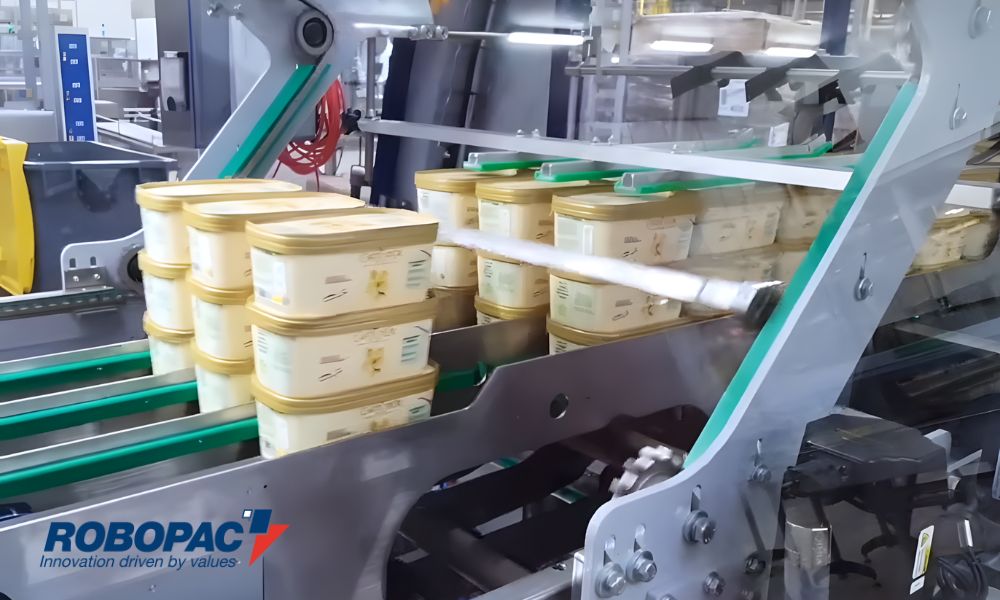
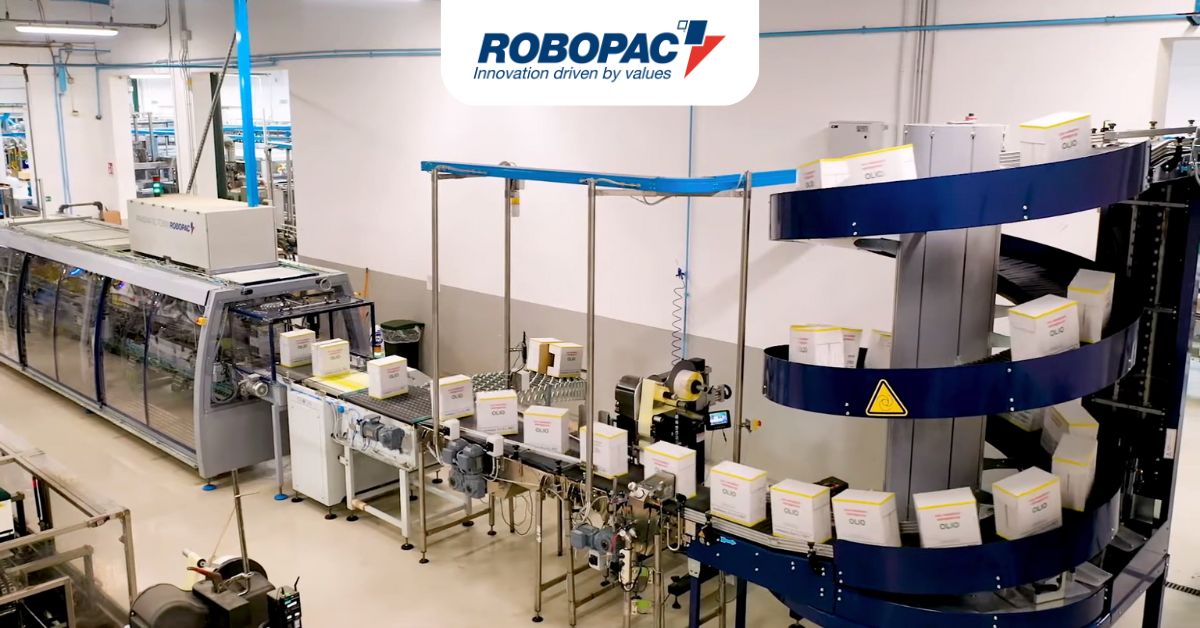
Automatic stretch wrappers integrate directly into production lines, requiring minimal operator intervention. These machines are best for high-volume operations where maximizing throughput and reducing labor costs justify the higher initial investment.
Automatic wrappers feature powered conveyors that move loads through the wrap zone and systems that attach and cut the film without manual handling. The level of automation you need depends on your volume. Operations processing over 100 loads per day often see a rapid return on investment through reduced labor and increased consistency.
Critical Features and Specifications
To choose the right stretch wrapper for your line requires considering several features that directly impact performance, safety, and cost of ownership. Look for a wrapper that has a load capacity and delivery system that fits your operation, with easy-to-use controls for seamless integration with staff.
Load Capacity
First, verify the machine’s load capacity and size limits. Check the maximum load weight, turntable dimensions, and maximum wrap height to verify they match your needs. Exceeding these specifications creates safety hazards and results in poor wrap quality.
Delivery System
The film delivery system is another critical component. A powered pre-stretch capability is essential for cost control, as it mechanically elongates the film before application. Systems offering 200 percent pre-stretch can cut film costs by more than half than machines without this feature. Look for adjustable tension controls to apply the correct containment force for different product types.
Interface Controls and Safety Features
User-friendly controls reduce training time and operator errors. Modern machines feature digital displays, the ability to save multiple wrap programs for different load types, and intuitive interfaces. Never compromise when it comes to safety. Stretch wrappers must include features like emergency stop buttons, sensors that detect obstructions in the wrap zone, and guarded pinch points.
Selecting the Appropriate Stretch Film
The machine is only half of the packaging equation; film selection directly impacts wrap quality and cost. Film gauge, or thickness, is a primary consideration. Thicker films provide more strength but cost more. A machine with high pre-stretch capability allows you to use thinner, less expensive films while maintaining the necessary containment force.
Film material also varies. Cast films offer better clarity and unwind quietly, while blown films provide higher puncture resistance for products with sharp corners or rough surfaces. Proper film threading is also crucial. Nicks or damage to the film roll can create weak spots that tear during wrapping, so training operators to handle film carefully is important.
Maintenance and Long-Term Support
Stretch wrappers generally require minimal maintenance, but planning for ongoing care extends machine life and prevents unexpected downtime. Basic preventive tasks include cleaning film residue from rollers, inspecting belts for wear, and lubricating moving parts.
Establishing a relationship with qualified service technicians before you need them is also a wise step. Verify that your distributor employs factory-trained technicians and stocks common replacement parts.
Cost Analysis and Return on Investment
The purchase price is only one component of the total cost of ownership. The most significant hidden cost is product damage from ineffective wrapping. A quality stretch wrapper dramatically reduces this expense.
Labor costs vary depending on the level of automation. Features like automatic film cutting and built-in scales reduce labor time per wrapped load, resulting in substantial savings in high-volume operations.
Material costs decrease with higher pre-stretch ratios. When evaluating machines, calculate the cost per load wrapped over the machine’s expected life. Investing in features that reduce labor or material costs often pays for itself quickly.
Find Your Ideal Stretch Wrap Machine at Robopac USA
Selecting the best stretch wrapper for your operation requires balancing multiple factors. At Robopac USA, our team can help you navigate these factors, identify potential issues, and recommend the ideal solution for your needs. Contact us today for a consultation and discover how the right stretch wrapper can reduce waste, decrease labor, and improve load stability for your business.