
Stretch wrapping is a crucial process for securing goods for transport and storage. For logistics and packaging coordinators, understanding the specific terminology is the first step toward optimizing warehouse operations. Knowing the language of stretch wrapping helps you select the right equipment for your facility’s unique needs. We explain the essential stretch wrapping terms below.
Understanding the Basics
At its core, a stretch wrapper is a machine that applies a varying amount of pre-stretched film based on the stretch wrapper technology around a pallet load. This process stabilizes the products with the correct amount of containment force, protecting them from damage, dust, and moisture during shipping and handling.
A key component of this machine is the film carriage. This is the part of the wrapper that holds the film roll and, more importantly, applies tension to the film as the machine wraps it around the load. Proper film tension and containment force is a necessity to create a secure, stable pallet.
Types of Stretch Wrappers
You must understand that there are two main types of stretch wrappers: semi-automatic and automatic. Choosing the right one for your operation will depend on your stretch wrapping volume and labor resources.
Semi-Automatic Stretch Wrappers
For semi-automatic stretch wrappers, an operator must place the pallet on the machine with a pallet jack or forklift, attach the film, and initiate the wrapping cycle. After the cycle completes, the operator cuts the film and removes the pallet. These machines are ideal for lower-volume operations, typically 30 or less pallets per hour, that require flexibility. They represent a cost-effective step up from manual hand wrapping, improving consistency and reducing labor strain.
Fully Automated Stretch Wrappers
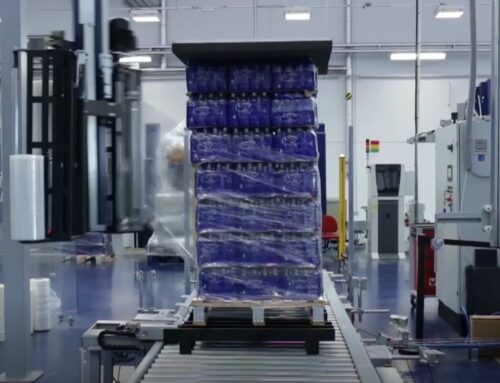
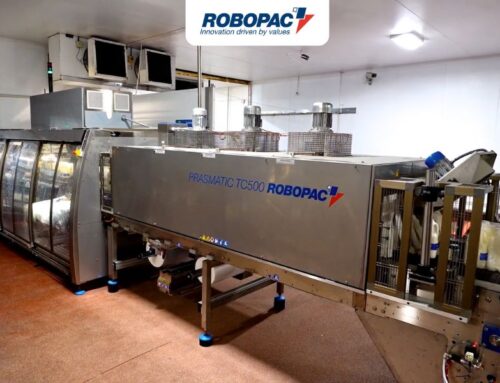
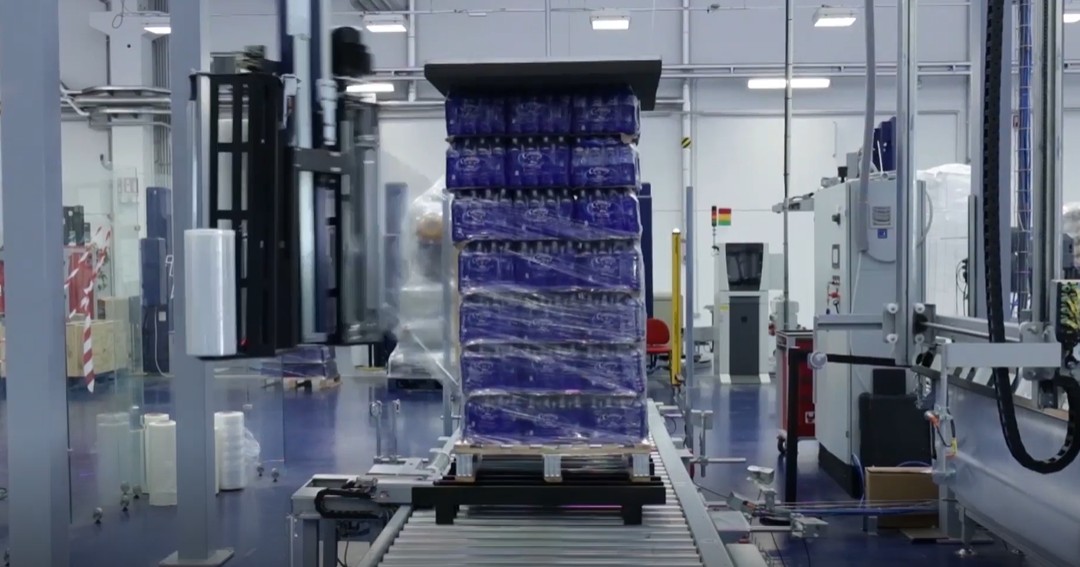
In contrast, a fully automatic stretch wrapper operates without any manual intervention. It uses conveyors to feed pallets into the wrapping zone, wraps them, and then discharges them. This seamless automation is perfect for high-volume facilities, typically more than 40 pallets per hour, that require speed and efficiency for their end-of-line packaging operations. By eliminating manual steps, these machines significantly increase throughput and reduce labor costs.
Stretch Wrapper Configurations
Other essential stretch wrapping terms we’ll explain include the wrapper configurations. Beyond the level of automation, stretch wrappers come in distinct configurations for different applications and load types. A turntable automatic pallet wrapper is a common design where the pallet sits on a rotating platform. As the turntable spins, the film carriage moves vertically to the top then back to the bottom to wrap the load. Many features are available including stainless steel versions for washdown or corrosive environments, cold and freezer packages for low temperature environments, roping devices to strengthen containment and lock the load to the pallet, and many more.
For very heavy, light, or unstable loads, a rotary arm style wrapper is an excellent choice. With this machine, the pallet remains stationary on the floor while a rotating arm travels around it, applying the film. A top platen feature is available to stabilize the top of the load to hold the load during the wrapping process. This prevents the load from shifting or falling during the wrapping process.
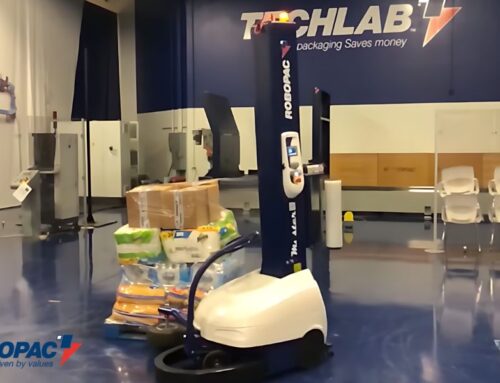
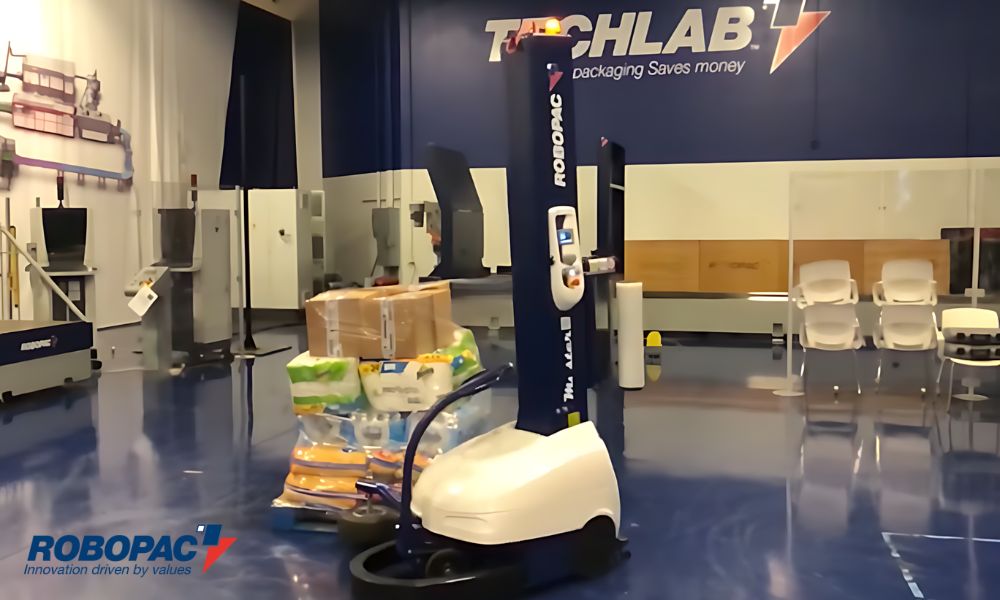
Portable stretch wrappers are a flexible battery-powered alternative. These lead acid or lithium battery powered machines wrap any length, width, and weight pallet load. Simply take the machine to the pallet, attach the film, and hit the start button. The portability alone can deliver 25% or more in productivity improvement.
Horizontal rotating ring stretch wrappers are the most productive and safest way to wrap cabinets, lumber, doors, windows, carpets, textiles, copper piping, corrugated tubing and more!
Finally, a rotary ring-style automatic stretch wrap machine is for high-speed applications. These machines feature a large ring that rotates around the pallet, applying film at very high speeds. This configuration is the ultimate solution for facilities that demand maximum throughput.
Making the Right Choice
Understanding these key terms—from the basic function of a stretch wrapper and film carriage to the differences between automatic, semi-automatic, turntable, rotary arm, and rotary ring machines—is essential. This knowledge empowers you to accurately evaluate your production needs and select the equipment that delivers the best return on investment.
If you are looking to enhance your end-of-line packaging process, the experts at Robopac USA can help. We can assess your specific application and guide you to the ideal stretch wrapping solution for your operation.