In the dairy industry, where margins are razor-thin, load damage during distribution represents a significant and preventable source of financial loss. Beyond the value of spoiled product, manufacturers face rejection fees, replacement shipping costs, and severe damage to brand reputation.
While environmental factors such as road vibration contribute to instability, improper pallet preparation and inadequate containment are common culprits of load damage. Below, we tackle the ways to prevent load damage in dairy distribution by selecting the right materials, sealing properly, and more.
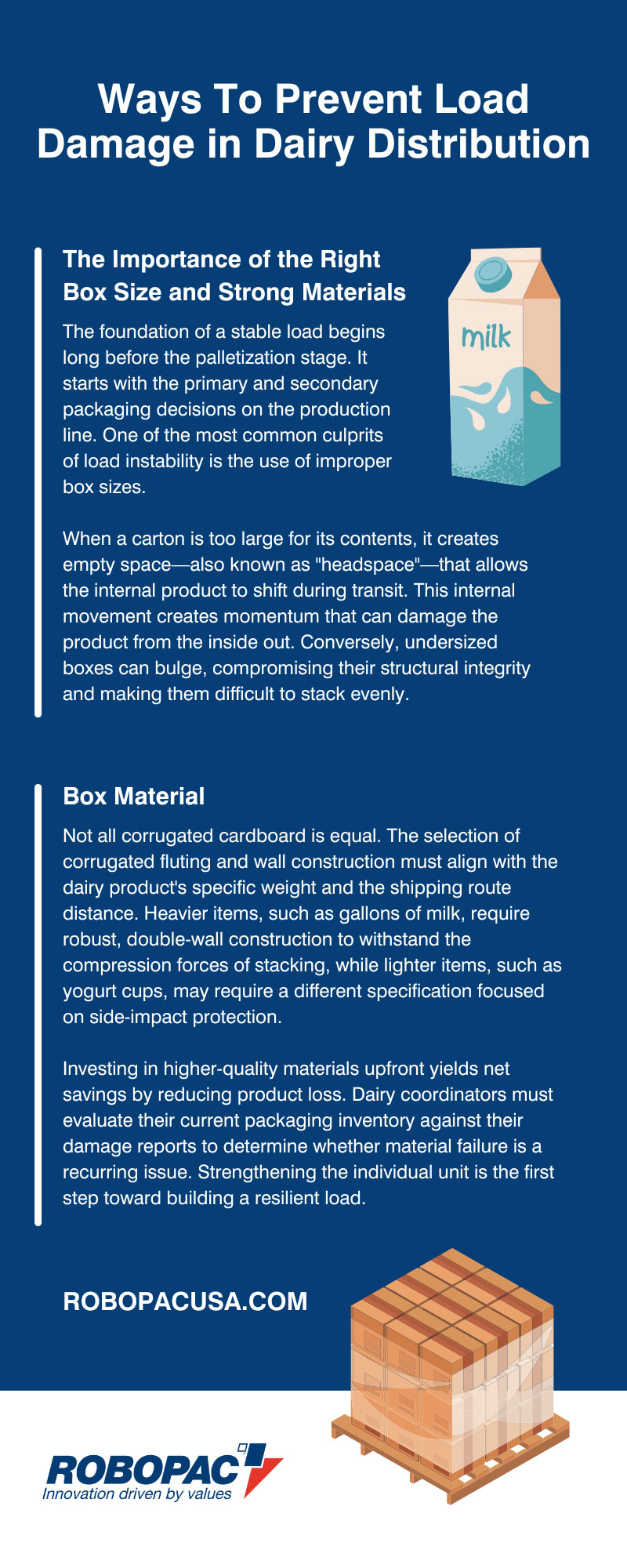
The Importance of the Right Box Size and Strong Materials
The foundation of a stable load begins long before the palletization stage. It starts with the primary and secondary packaging decisions on the production line. One of the most common culprits of load instability is the use of improper box sizes.
When a carton is too large for its contents, it creates empty space—also known as “headspace”—that allows the internal product to shift during transit. This internal movement creates momentum that can damage the product from the inside out. Conversely, undersized boxes can bulge, compromising their structural integrity and making them difficult to stack evenly.
Box Material
Not all corrugated cardboard is equal. The selection of corrugated fluting and wall construction must align with the dairy product’s specific weight and the shipping route distance. Heavier items, such as gallons of milk, require robust, double-wall construction to withstand the compression forces of stacking, while lighter items, such as yogurt cups, may require a different specification focused on side-impact protection.
Investing in higher-quality materials upfront yields net savings by reducing product loss. Dairy coordinators must evaluate their current packaging inventory against their damage reports to determine whether material failure is a recurring issue. Strengthening the individual unit is the first step toward building a resilient load.
Proper Sealing and Preventive Maintenance for Case Packers
Even the strongest box will fail without correct sealing. The application of tape or adhesive is a critical control point in the packaging line. If the tape does not adhere correctly or if case packers do not square the flaps before sealing, the box loses a significant portion of its stacking strength. A box that is not perfectly square will not stack uniformly, causing columns to learn and pallets to fail.
This consistency depends heavily on the case packer’s performance. Automated case packers are workhorses in the dairy industry, but they require regular attention to maintain peak performance.
Case Packer Maintenance
Preventive maintenance for case packers is not just about avoiding downtime; it is about ensuring quality output. Regularly cleaning, lubricating, and inspecting dairy packing machines prevents malfunctions that create poorly formed or sealed cases. A machine slightly out of alignment may produce cases that are millimeters off-square—a negligible difference for a single box, but a catastrophic deviation when stacked five feet high.
Routine inspections should focus on the machine’s wear parts, such as suction cups, belts, and taping heads. By treating the case packer as a precision instrument rather than just a conveyor, facilities can eliminate a significant source of variability in load stability.
Best Practices for Stacking: Uniform Stacking and Containment Force
After boxing and sealing the product, the focus shifts to arranging the boxes on the pallet. Uniform stacking is a non-negotiable principle for dairy distribution. Always stack boxes in aligned columns, allowing the corners—the strongest points—to bear the load. “Interlocking” or brick-laying patterns, while intuitive for stability in some contexts, can reduce the compressive strength of corrugated boxes.
Weight distribution within the stack is equally important. Placing heavier items at the bottom and lighter items at the top lowers the pallet’s center of gravity, reducing the risk of tipping. However, a perfect stack will still shift without proper containment. This is where the containment force comes into play.
Proper Containment Force
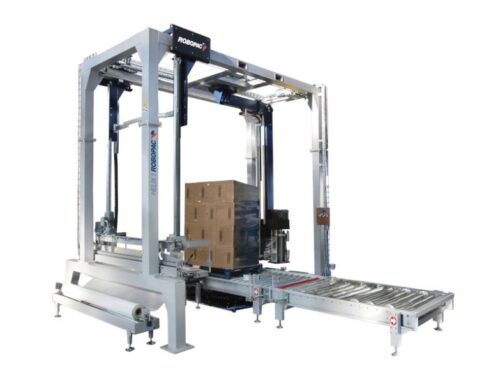
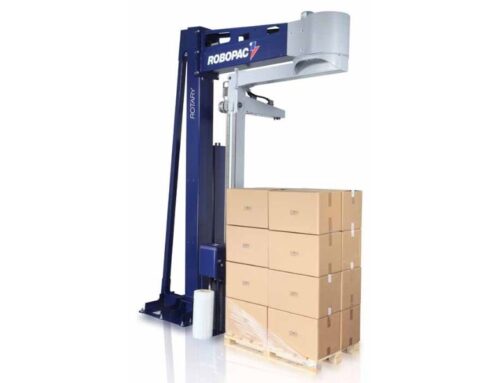
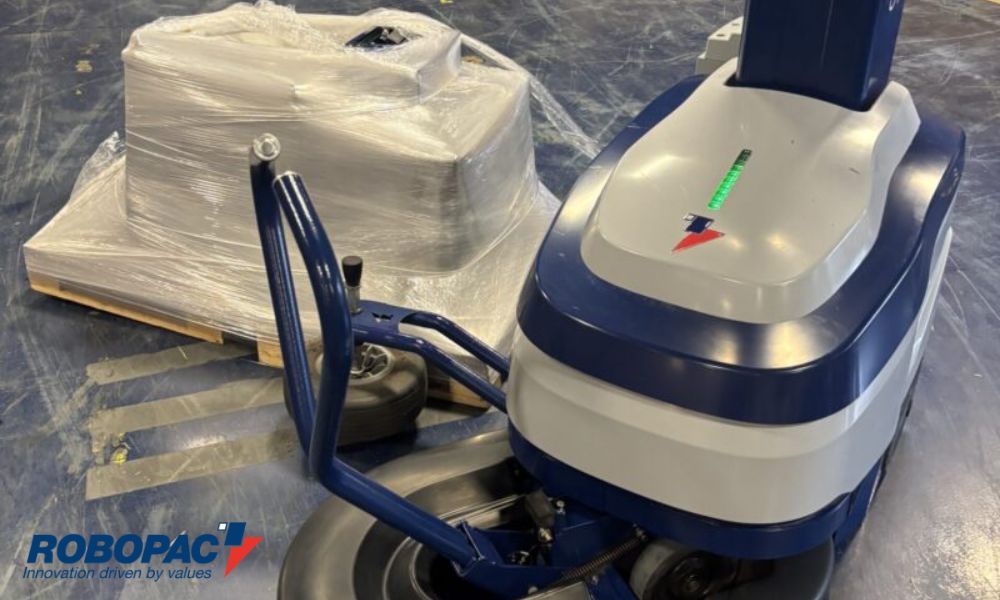
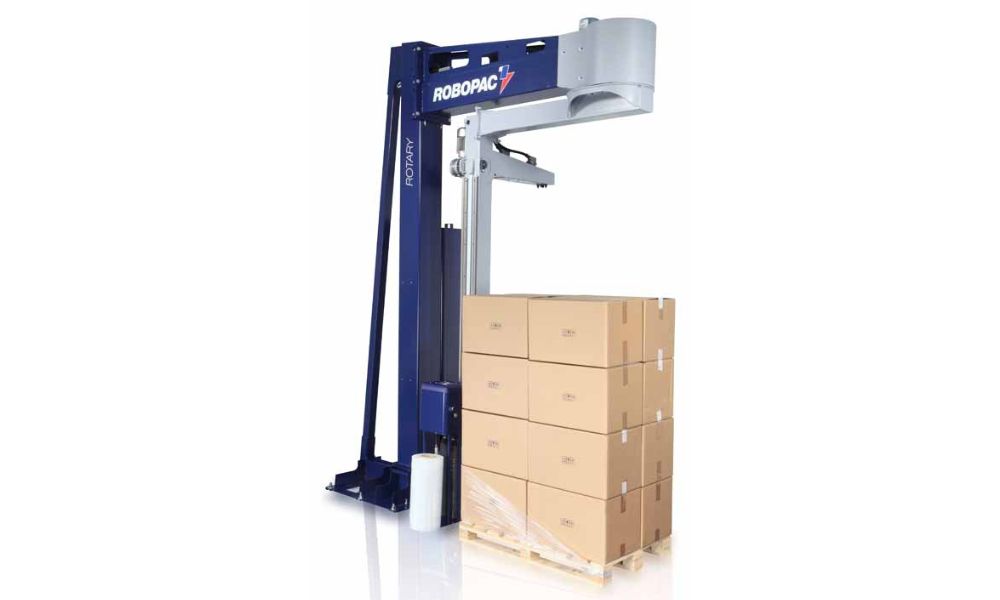
Containment force is the total squeezing pressure the stretch film exerts on the load. It is the single most critical factor in safe pallet shipping. Applying the right containment force is a delicate balance.
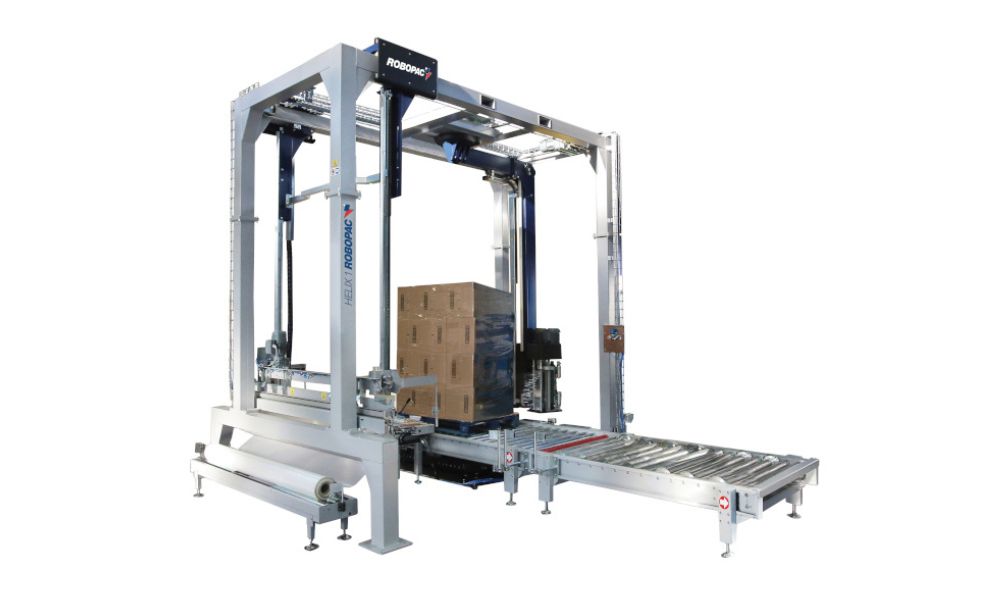
If the wrap is too loose, the load will shift, vibrate, and potentially collapse during transit. If the wrap is too tight, it can crush the corners of the boxes or deform the product, leading to “unsellables” upon arrival. Advanced stretch wrappers allow operators to dial in the specific containment force necessary for different load profiles, providing stability without crushing.
Optimizing Load Patterns and Using Dunnage
Another way to prevent load damage in dairy distribution is with optimal load patterns. The load pattern is the arrangement of pallets within the trailer. One effective method for maximizing space and stability is “pinwheeling.” This technique involves alternating the orientation of the pallets to create a tighter fit within the trailer. Pinwheeling reduces the void space between pallets, limiting lateral shifting.
Despite the best load planning, gaps will inevitably exist. These voids are invitations for disaster. As the truck navigates turns and bumps, pallets will migrate toward these open spaces. Utilizing dunnage is the professional solution to this problem.
Dunnage
Inserting airbags, honeycomb partitions, or slip sheets into these gaps immobilizes the cargo. Airbags are particularly effective as they can inflate to fill irregular voids, providing a cushion that absorbs shock and prevents movement. Using dunnage demonstrates a proactive approach to logistics. It signifies that the distributor understands the physics of transport and is taking active steps to mitigate risk.
The Role of Air-Ride Trailers and Strategic Load Planning
The vehicle itself plays a significant role in the condition of the arriving product. Standard spring-suspension trailers transmit significant road shock and vibration directly to the cargo. For sensitive dairy products, this constant vibration can cause lids to pop, seals to break, or boxes to fatigue and collapse. Air-ride trailers use a suspension system that floats the trailer on air bags, significantly reducing the impact of potholes and rough pavement.
Using air-ride suspension cushions to absorb road shock and vibration, which is especially crucial for stiff trailers. This technology effectively isolates the load from the road, providing a smoother ride that preserves the integrity of the packaging.
Optimal Load Planning
Strategic load planning complements the use of proper equipment. This involves arranging pallets for space, weight distribution, and stability. Placing the heaviest pallets over the trailer axles and balancing the weight side-to-side prevents the trailer from leaning or handling poorly, which can induce sway and further stress the cargo. Load planning software can help coordinators design the optimal layout for each shipment, taking the guesswork out of loading dock operations.
Improving Dairy Distribution with the Right Strategies
Maintaining product quality from plant to consumer requires addressing inefficiencies in packaging and handling rather than accepting load damage as a cost of business. By optimizing box selection, sealing, and machine maintenance, distributors establish a foundation for secure transit.
Further securing loads through uniform palletization, precise containment force, and equipment like air-ride trailers effectively shields cargo from the physical stresses of the road. Implementing these advanced Robopac solutions ultimately protects the bottom line, preserves brand reputation, and keeps your delivery of high-quality dairy products safe.