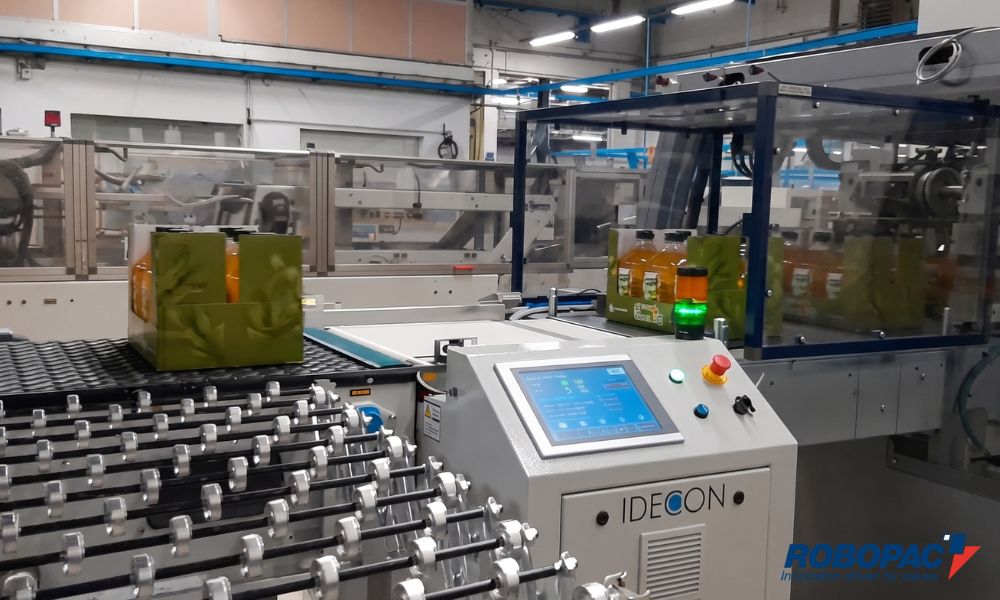
Food manufacturers depend on end-of-line packaging equipment to prepare products for storage, distribution, and delivery. Case packers, shrink wrappers, palletizers, stretch wrappers, and conveying systems help turn individual products into secure loads that can move through the supply chain.
Manufacturers can install these machines as separate workstations or connect them as one coordinated line. Both approaches can improve productivity, but they differ in cost, flexibility, space requirements, labor demands, and production capacity. Keep reading for a comparison of standalone vs. integrated food end-of-line packaging machines.
What Is a Standalone Packaging Machine?
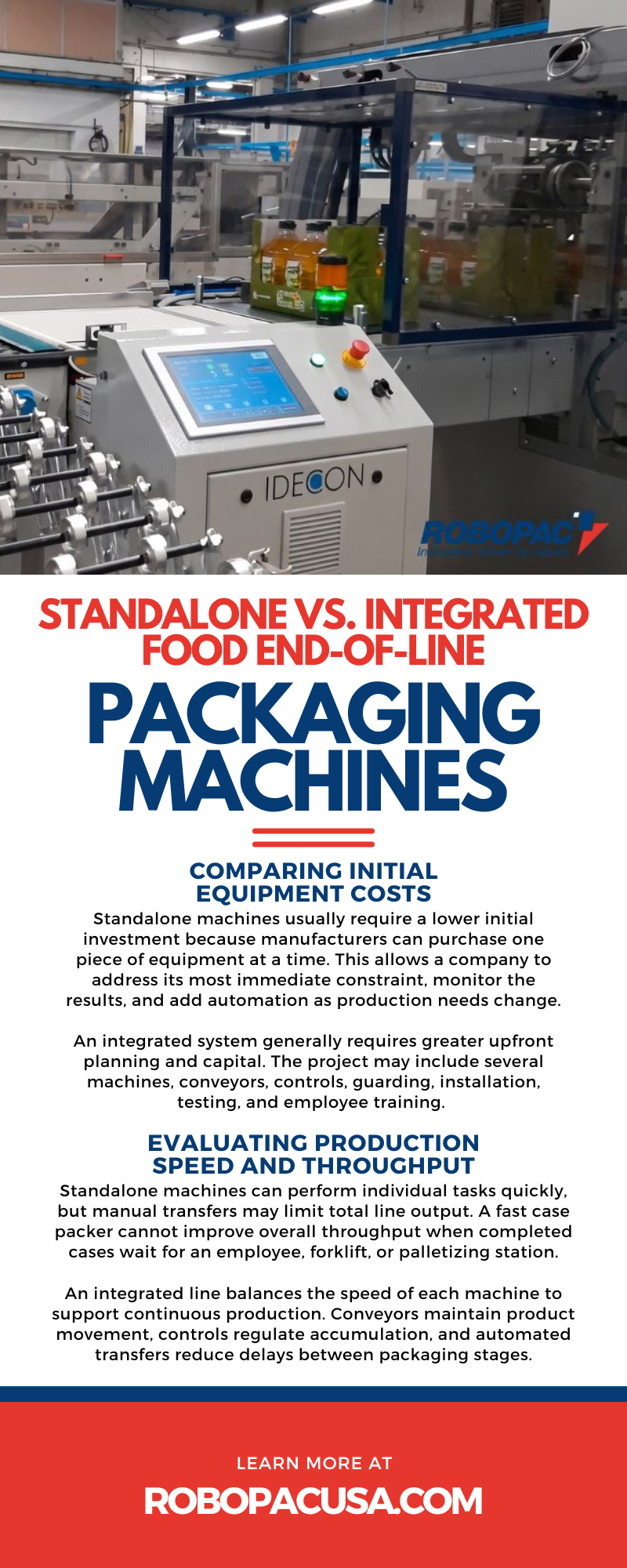
A standalone packaging machine performs a specific function without operating as part of a fully cohesive system. A manufacturer might use one machine to pack products into cases, another to palletize those cases, and a separate stretch wrapper to secure each load.
Operators or material-handling equipment typically move products between these workstations. Each machine may have its own controls, production schedule, and operating requirements, which allows the facility to manage each packaging stage independently.
Where Standalone Machines Fit Best
Standalone equipment can serve food manufacturers with lower production volumes, multiple product formats, or tight automation budgets. It also gives facilities the ability to automate one labor-intensive process without rebuilding the entire packaging area.
A plant that currently wraps pallets by hand, for example, could add a semi-automatic stretch wrapper while keeping its existing case-packing and pallet-building processes. This single upgrade can improve load consistency, reduce physical strain, and create measurable gains without requiring a complete line redesign.
What Is an Integrated Packaging Line?
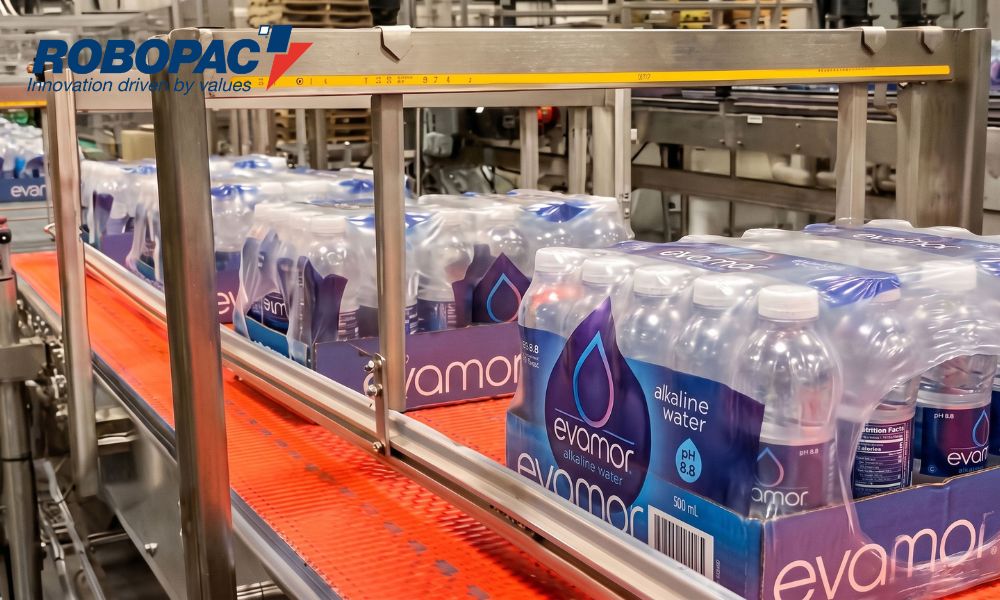
An integrated packaging line connects multiple machines, so products move through each stage with little manual handling. The line may combine case packing, shrink bundling, palletizing, stretch wrapping, conveyors, and controls into a coordinated process.
Sensors and control systems communicate across the line to manage product flow. When upstream equipment changes speed or stops, downstream machines can respond accordingly, reducing product backups, gaps, and unnecessary handling.
How Integration Supports Continuous Production
Integrated food and beverage packaging machinery can provide a strong fit for facilities that run stable products at medium or high volumes. Connecting each packaging stage supports predictable movement from primary packaging through final load containment.
The system can also reduce the number of times employees touch, lift, or reposition products. This streamlined flow helps manufacturers maintain consistent output while assigning employees to oversight, quality checks, replenishment, and other skilled tasks.
Comparing Initial Equipment Costs
When comparing standalone vs. integrated food end-of-line packaging machines, cost should be the first factor in your decision. Standalone machines usually require a lower initial investment because manufacturers can purchase one piece of equipment at a time. This allows a company to address its most immediate constraint, monitor the results, and add automation as production needs change.
An integrated system generally requires greater upfront planning and capital. The project may include several machines, conveyors, controls, guarding, installation, testing, and employee training. While the initial cost can be higher, the line may deliver greater productivity across the entire end-of-line process.
Looking Beyond Purchase Price
The machine price represents only one part of the investment. Manufacturers should also examine labor costs, maintenance requirements, packaging material use, downtime, floor space, and the cost of moving products between separate stations.
A standalone machine with a lower purchase price may require more employees to transfer products or coordinate production. An integrated line may reduce those recurring expenses, but it requires the facility to support a more complex system.
Evaluating Production Speed and Throughput
Standalone machines can perform individual tasks quickly, but manual transfers may limit total line output. A fast case packer cannot improve overall throughput when completed cases wait for an employee, forklift, or palletizing station.
An integrated line balances the speed of each machine to support continuous production. Conveyors maintain product movement, controls regulate accumulation, and automated transfers reduce delays between packaging stages.
Finding the Bottleneck
Manufacturers should identify where production slows before selecting either approach. The problem may come from hand packing, pallet building, load wrapping, changeovers, product accumulation, or an equipment mismatch between two stages. Automating the wrong process can move the bottleneck without improving total output.
Comparing Flexibility and Changeovers
Standalone machines give manufacturers more freedom to run different products at separate stations. A facility can change one machine without stopping every packaging function, which can benefit plants that produce short runs, seasonal items, or a wide range of package sizes.
Integrated lines can also handle multiple products, but they require coordinated changeovers. Operators may need to adjust guides, conveyors, pack patterns, wrapping settings, and machine recipes across several connected components.
Matching the System to the Product Mix
A plant with predictable, high-volume production may gain more value from integration because the line can run the same formats for longer periods. A manufacturer with frequent product changes may prefer standalone or modular equipment that allows individual processes to operate independently.
Product stability also affects the decision. Lightweight containers, flexible bags, glass bottles, cans, trays, and cartons move differently through packaging equipment.
Planning for Available Floor Space
Standalone machines can fit into existing production areas with fewer immediate layout changes. However, separate workstations require room for operators, product staging, pallet movement, safety clearances, and material storage.
An integrated line may create a more direct production flow, but conveyors and guarding require a careful layout. Manufacturers must account for columns, doors, utilities, sanitation zones, forklift routes, ceiling height, maintenance access, and future expansion.
Understanding Labor and Safety Requirements
Standalone equipment can reduce manual work at a specific station, but employees may still transfer products between machines. Those handoffs can involve repetitive lifting, pallet handling, forklift traffic, and frequent interaction with equipment.
Integrated systems can reduce manual touchpoints by automating product transfers and pallet movement. Proper guarding, sensors, access controls, and operating procedures remain essential, but coordinated automation can create a more controlled work area.
Considering Maintenance and Downtime
Standalone machines isolate equipment problems more easily. When one machine requires service, employees may continue other packaging tasks or use a temporary manual process. Facilities can also schedule maintenance for each machine separately.
A failure within an integrated line can affect several packaging stages. Manufacturers can reduce this risk through preventive maintenance, spare-parts planning, operator inspections, and system designs that provide appropriate accumulation between machines.
Choosing a Scalable Packaging Strategy
Manufacturers do not always need to choose between a completely manual process and a fully integrated line. A modular approach can automate priority areas first while preparing the facility for additional equipment later.
For example, a company might install a standalone case packer or stretch wrapper with controls and conveyor connections that support future integration. This strategy allows the manufacturer to improve current performance while protecting its ability to expand.
Select Equipment Around the Complete Process
Standalone packaging machines provide flexibility, lower entry costs, and a practical way to automate individual tasks. Integrated lines support continuous product flow, higher throughput, reduced handling, and coordinated control across multiple packaging stages.
The right approach depends on production volume, product mix, facility layout, workforce needs, and long-term plans. Robopac USA offers configurable case packing, shrink bundling, palletizing, stretch wrapping, and material-handling solutions for food operations with a wide range of requirements. Contact Robopac USA to discuss your end-of-line process and identify a packaging system built around your products, space, and production demands.