
End-of-line packaging represents the final stage before products reach distribution channels. This critical phase determines load stability, shipping efficiency, and ultimately, customer satisfaction.
The integration of advanced robotics, artificial intelligence, and flexible automation assists packaging solutions that dynamically respond to production demands. Below, we explain the key innovations and trends in robotic end-of-line packaging for various industries.
Enhanced Efficiency Through Automation
Robotic automation delivers measurable improvements in packaging speed and consistency. Modern systems integrate multiple functions into cohesive workflows, eliminating manual touchpoints and reducing cycle times.
Integrated Systems
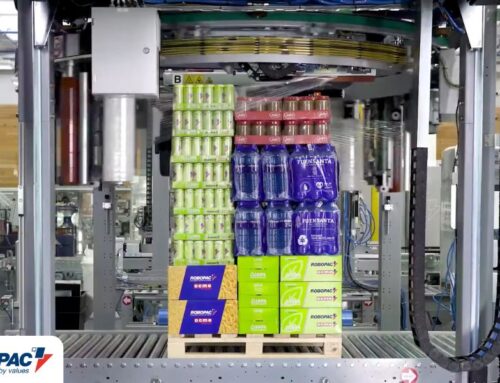
Contemporary robotic packaging lines combine case packing, palletizing, and wrapping into unified systems. This integration eliminates transfer delays between standalone machines. Products flow seamlessly from packing to palletizing to stretch wrapping without manual intervention.
This integrated approach reduces floor space requirements while improving material flow. A facility that previously needed separate areas for each packaging function can consolidate operations into a compact footprint. This spatial efficiency becomes particularly valuable during warehouse expansions or facility reconfigurations.
Robotic Palletizing Systems
High-speed robotic palletizers handle diverse product types with remarkable accuracy. These systems arrange cases, bottles, and containers into optimal pallet patterns at rates exceeding 200 cases per minute. Advanced vision systems guide robots to adjust for product variations in real time, maintaining consistent layer formation regardless of size differences.
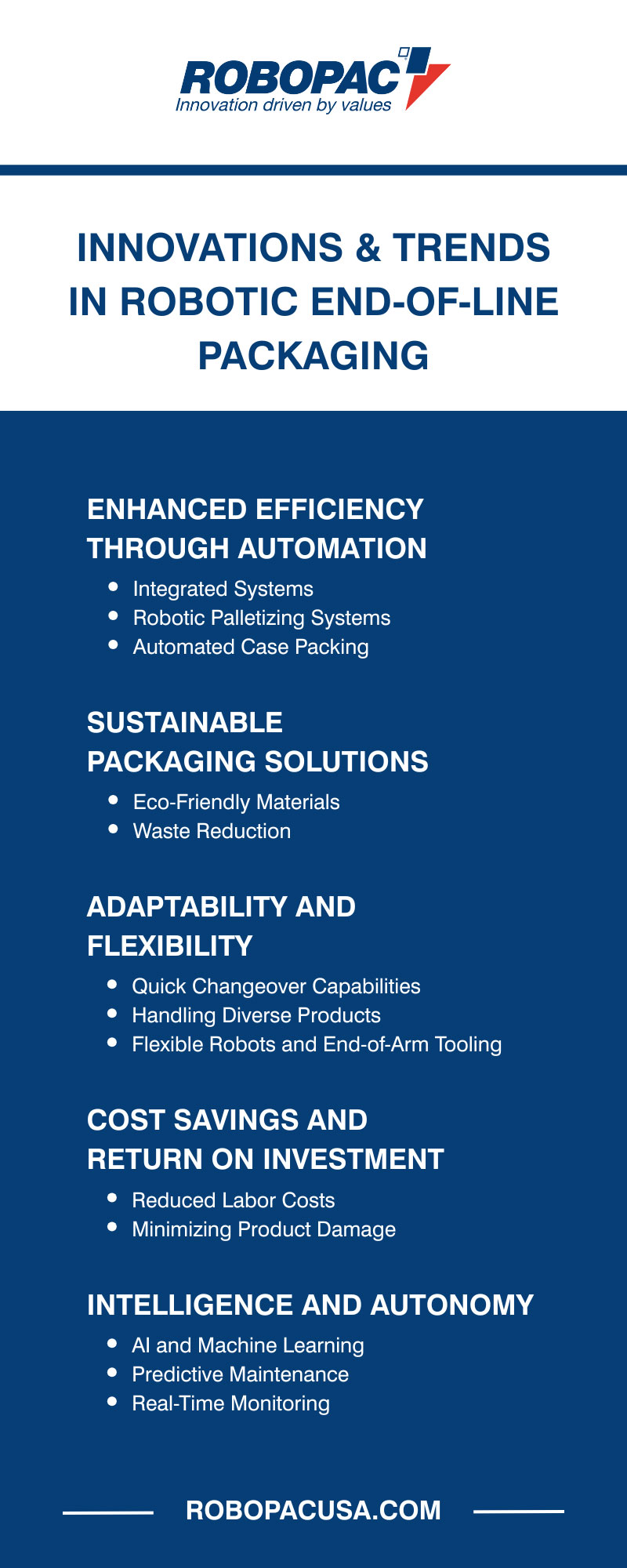
Palletizers exemplify this capability in beverage applications, stacking trayless water bottles and beer cans with precision that manual operations cannot match. The systems accommodate multiple SKUs simultaneously, switching between products without extended changeover periods.
Automated Case Packing
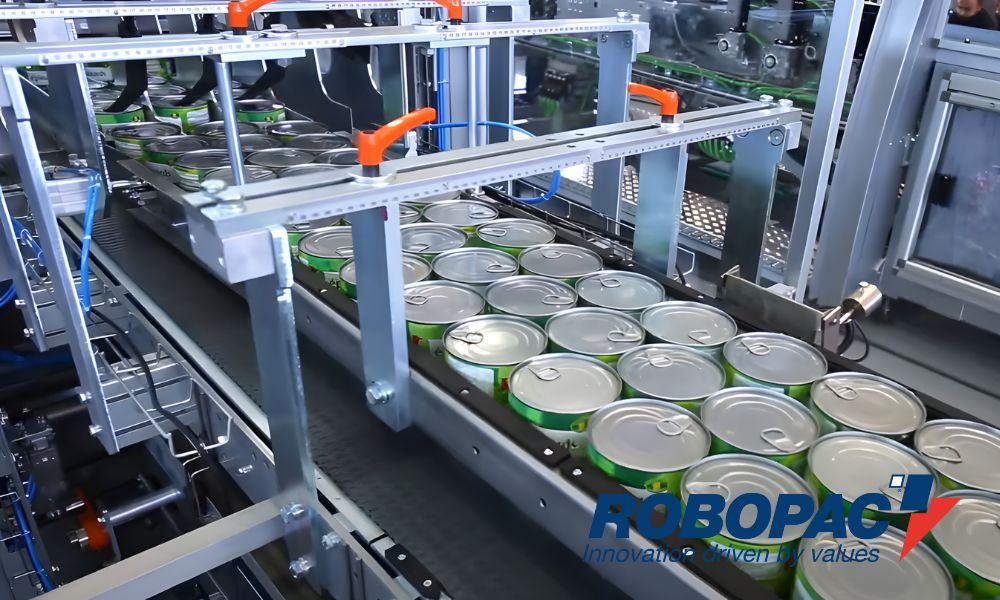
Robotic case packers maintain uniform pack quality across millions of cycles. Wrap-around case packers handle bottles, cans, and other containers with gentle precision, minimizing product damage. These machines form, load, and seal cases at speeds up to 60 cases per minute while maintaining tight tolerances.
Combination systems that integrate shrink wrapping with case packing provide additional packaging options within the same footprint. This versatility allows manufacturers to respond to different retail requirements without investing in separate equipment lines.
Sustainable Packaging Solutions
Sustainability is another innovation and trend in robotic end-of-line packaging. Modern equipment supports environmental consideration through intelligent material use and waste-reduction strategies.
Eco-Friendly Materials
Robotic systems now accommodate recyclable and biodegradable packaging materials without sacrificing performance. Advanced end-of-arm tooling (EOAT) handles delicate eco-friendly films and papers with the same reliability as traditional materials. Pressure-sensitive grippers adjust force dynamically to prevent tearing while maintaining secure holds.
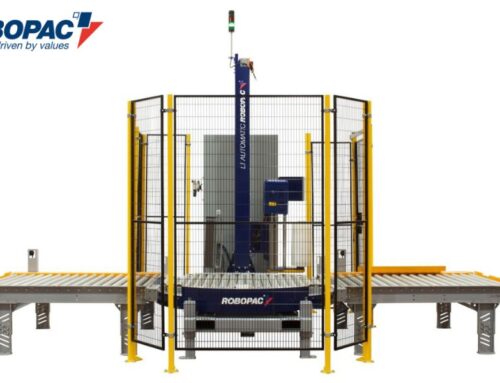
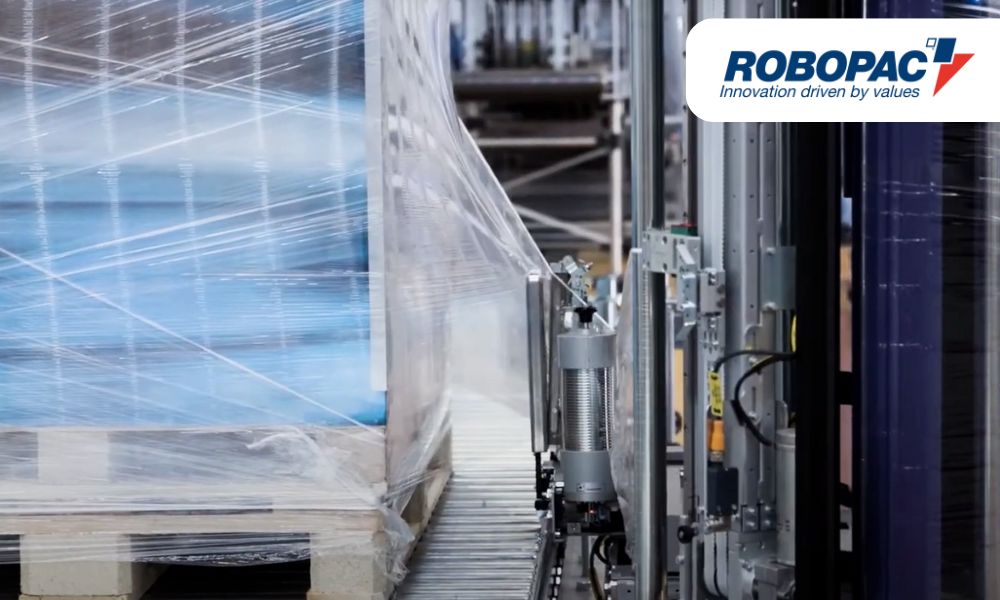
Stretch wrappers with film pre-stretch technology reduce plastic consumption significantly in comparison to manual wrapping methods. This optimization directly reduces material costs and environmental impact.
Waste Reduction
Intelligent systems minimize packaging waste by precisely applying materials and continuously monitoring processes. Robotic wrappers calculate exact film requirements for each load configuration, eliminating overuse. Vision systems detect packaging defects early in the process, allowing corrections before wasting materials.
Case packers with adjustable forming capabilities adapt carton dimensions to match product requirements exactly. This flexibility eliminates the need for void fill materials and reduces corrugate usage. Over production cycles, these incremental savings compound into significant waste reduction and cost savings.
Adaptability and Flexibility
Market demands shift rapidly. Robotic packaging systems with flexible programming and modular designs adapt to changing requirements without extensive retooling.
Quick Changeover Capabilities
Modern robotic systems store hundreds of product recipes in their control systems. Operators switch between SKUs via simple touchscreen interfaces, completing recipe changes in only minutes. Mechanical adjustments that once required tools and significant downtime now occur automatically through servo-driven positioning systems.
This rapid changeover capability proves essential for co-packers and contract manufacturers serving multiple clients. The ability to switch between products quickly maintains high equipment utilization rates and supports flexible production scheduling.
Handling Diverse Products
Robotic systems with interchangeable EOAT manage products ranging from fragile glass bottles to rigid metal containers. Vacuum grippers, mechanical clamps, and magnetic attachers can swap quickly to accommodate different product characteristics. A single robotic palletizer can handle aluminum panels in the morning and beverage cases in the afternoon with minimal transition time.
This versatility extends equipment lifespan and investment value. As product portfolios evolve, existing robotic systems adapt rather than requiring replacement. The modular architecture supports incremental capability additions without disrupting existing operations.
Flexible Robots and End-of-Arm Tooling
Collaborative robots (cobots) expand packaging flexibility by working safely alongside human operators. These systems handle secondary packaging tasks in spaces where traditional industrial robots cannot operate. Custom EOAT for specific product geometries ensures secure handling across diverse applications.
Mobile stretch wrappers exemplify this flexibility, wrapping mixed loads directly on loading docks. Their autonomous navigation enables deployment wherever wrapping is necessary, adapting to workflow changes without requiring a fixed installation.
Cost Savings and Return on Investment
Financial performance remains vital when evaluating packaging automation. Robotic systems deliver quantifiable returns through labor optimization and damage reduction.
Reduced Labor Costs
Automated packaging lines reduce direct labor requirements significantly when they replace manual operations. A single operator can supervise multiple robotic cells, monitoring performance rather than performing repetitive physical tasks. This shift allows facilities to redeploy workers to value-added activities while maintaining production output.
Labor cost reductions are particularly significant for facilities facing workforce shortages or high turnover. Robotic systems maintain consistent output regardless of staffing challenges, ensuring production continuity during peak demand periods.
Minimizing Product Damage
Consistent robotic handling reduces product damage during packaging operations. Gentle gripping and precise placement prevent the crushing, scratching, and dropping that occur with manual handling. Food & beverage packaging equipment, for example, can handle fragile products like glass bottles and delicate food items with care to reduce damage and improve profitability.
Stretch wrapping provides superior load containment, reducing shipping damage and customer returns. Properly wrapped pallets arrive intact even after rough handling during transportation. This reliability enhances brand reputation and customer satisfaction while reducing replacement costs.
Intelligence and Autonomy
Artificial intelligence is everywhere these days, including end-of-line packaging. AI and machine learning transform robotic packaging systems from programmable machines into intelligent partners that optimize their own performance.
AI and Machine Learning
Modern packaging robots learn from operational data to improve performance continuously. Machine learning algorithms analyze thousands of packaging cycles to identify optimal parameters for speed, material usage, and product handling. These systems automatically adjust operating parameters to maintain peak efficiency as conditions change.
Predictive Maintenance
Sensor-equipped robotic systems continuously monitor component health. Vibration sensors detect bearing wear, thermal cameras identify overheating motors, and force sensors track gripper performance. This comprehensive monitoring enables condition-based maintenance, replacing components before failure rather than on fixed schedules.
Facilities implementing predictive maintenance reduce unplanned downtime. The cost savings from avoiding emergency repairs and production interruptions quickly offset the investment in monitoring technology.
Real-Time Monitoring
Cloud-connected packaging systems provide real-time performance visibility across entire facilities. Operators monitor multiple lines from central control rooms and respond immediately to alerts. Production managers can access performance dashboards remotely to track throughput, efficiency, and quality metrics from any location.
The Path Forward in Robotic Packaging
Robotic end-of-line packaging continues evolving rapidly. Robopac USA specializes in designing integrated packaging solutions for specific industry requirements.
Our systems combine case packing, palletizing, and stretch wrapping into cohesive operations that maximize efficiency and minimize costs. Contact our team to explore how robotic packaging automation can transform your end-of-line operations and position your facility for long-term competitive advantage.