Tall and irregular pallet loads can create major problems at the end of the line. When the film does not reach the top of the load, the unit can shift in transit, lean under compression, or arrive damaged. Loads with uneven edges, changing widths, or unstable product stacks also make it harder to apply consistent containment from top to bottom.
That is why the right wrapping method matters as much as the film itself. Companies that still hand-wrap these loads usually struggle with inconsistent tension, poor coverage, and longer cycle times. A better approach is to use equipment that adapts to varying load shapes while delivering repeatable performance. In this article, we’ll discuss the best practices for wrapping tall or irregular pallet loads so everything arrives intact.
Start With the Right Machine Configuration
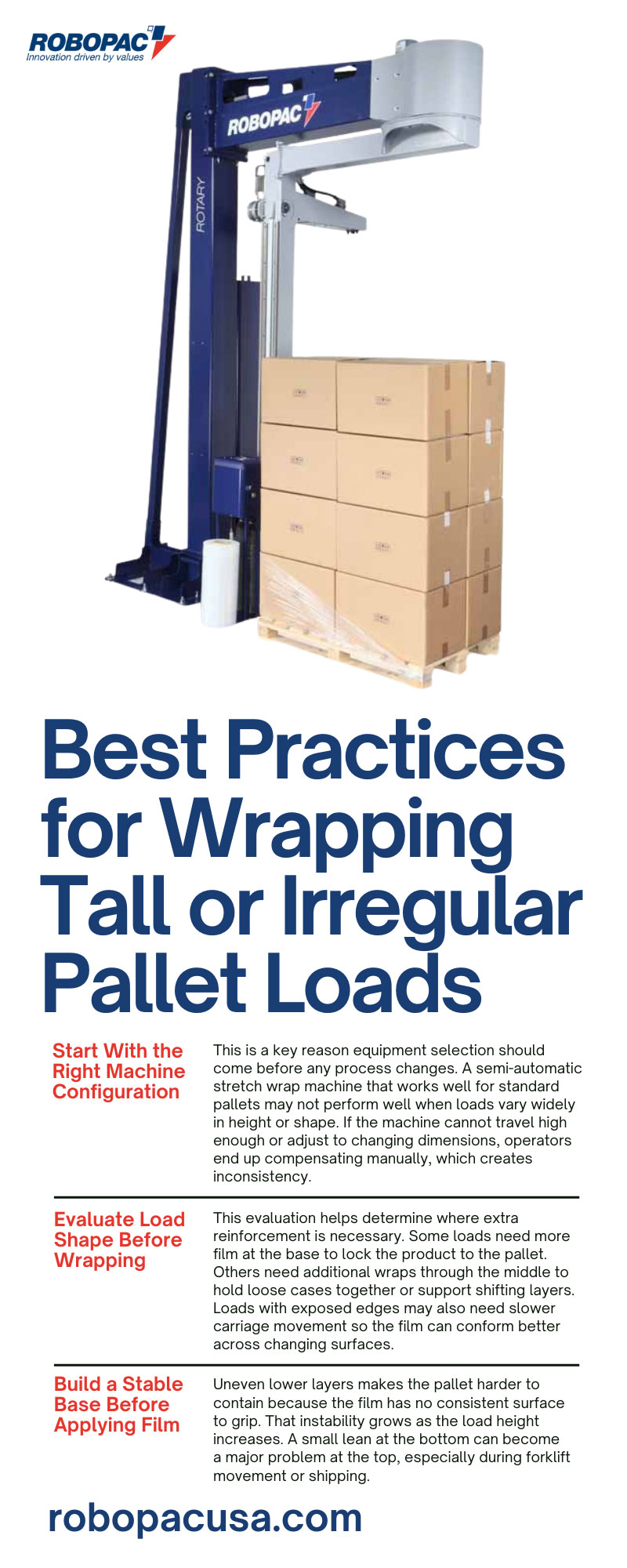
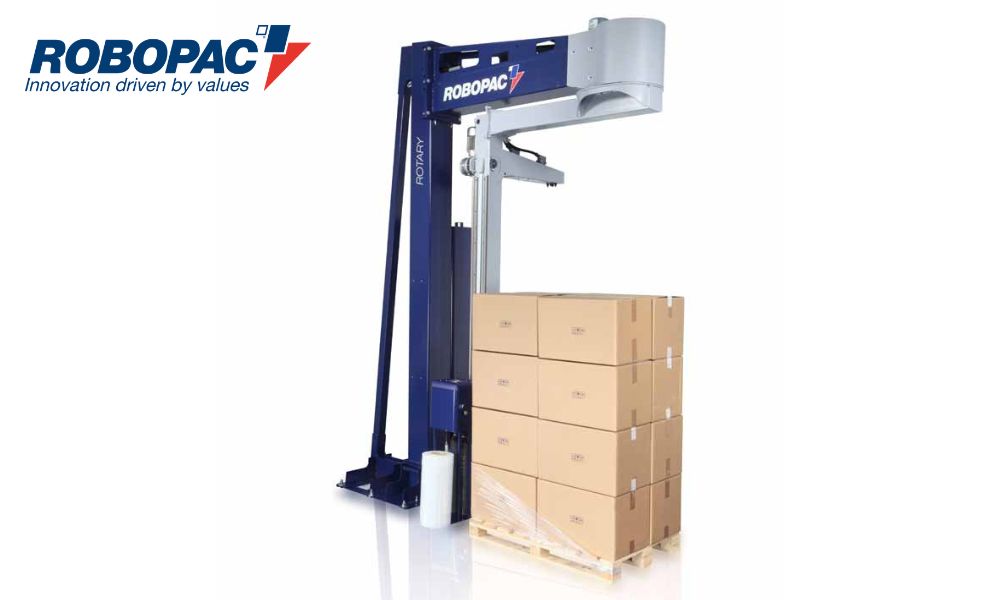
The first best practice is simple: make sure your wrapper is physically capable of handling the load height. Tall pallets need an extended mast height so the film carriage can reach the top of the load and secure the upper portion properly. Without that reach, operators leave the top unsupported, which weakens the entire wrap pattern.
This is a key reason equipment selection should come before any process changes. A semi-automatic stretch wrap machine that works well for standard pallets may not perform well when loads vary widely in height or shape. If the machine cannot travel high enough or adjust to changing dimensions, operators end up compensating manually, which creates inconsistency.
A portable system like the Robot S7 helps solve another common challenge: non-standard pallet size. Because it wraps loads of any length or width, it suits facilities that ship oversized products, long items, mixed-case loads, or products stacked in configurations that do not fit a turntable-based system. That flexibility lets the equipment adapt to the load instead of forcing the load to fit the machine.
Evaluate Load Shape Before Wrapping
Operators should never treat tall or irregular loads like standard cube-shaped pallets. Before wrapping begins, operators must look at the load’s height, weight distribution, overhang, and weak points. A pallet with a narrow base and a heavy top section will need a different wrapping strategy than a wide pallet with protruding corners.
This evaluation helps determine where extra reinforcement is necessary. Some loads need more film at the base to lock the product to the pallet. Others need additional wraps through the middle to hold loose cases together or support shifting layers. Loads with exposed edges may also need slower carriage movement so the film can conform better across changing surfaces.
Build a Stable Base Before Applying Film
Another best practice for wrapping tall or irregular pallet loads is to first build a stable base. The strongest wrap in the world cannot save a poorly built pallet. For tall loads, stability starts at the base. Cases, trays, or bundled products must stack and align squarely so the load has a solid footprint before it moves to the wrapping stage.
Uneven lower layers makes the pallet harder to contain because the film has no consistent surface to grip. That instability grows as the load height increases. A small lean at the bottom can become a major problem at the top, especially during forklift movement or shipping.
Secure The Load To the Pallet
One of the most important procedures for wrapping tall or irregular loads is tying the product to the pallet. This step creates a single unitized load instead of a stack of separate items sitting loosely on a wooden or plastic base. When the film anchors the load to the pallet, it resists shifting during transport much more effectively.
This is especially important for loads with height, uneven surfaces, or changing dimensions. These loads experience more movement during acceleration, braking, and turning. If the bottom layers are not secure, the stretch film may hold the products together but still allow the full stack to slide.
Adjust Film Tension to Match the Load
Film tension should match the product, not the operator’s guess. Too much force can crush cartons, distort lighter products, or pull an unstable load out of alignment. Too little force leaves slack film that fails to provide enough containment.
Tall and irregular loads need controlled tension because pressure does not distribute evenly across the surface. Corners, gaps, and protrusions all change how the film stretches during application. A machine-based process gives operators more control over those variables than hand-wrapping ever can.
Use a Wrap Pattern That Matches Load Risk
Not every load needs the same number of wraps or the same carriage speed. Tall pallets usually benefit from more reinforcement at the bottom and middle because those zones manage most of the movement during handling. Irregular loads may also need extra wraps around weak spots where product geometry changes suddenly.
Operators should avoid applying a one-size-fits-all cycle. A standard pattern may work on uniform pallets, but irregular shipments need a more deliberate approach. When the load has a narrow top, exposed corners, or voids between products, the wrap pattern should account for those details.
Train Operators to Watch for Trouble Signs
Equipment matters, but operator awareness still plays a major role in wrapping success. Teams should know how to identify signs of poor containment before a pallet leaves the line. Loose film tails, shifting corners, leaning product, or missed top coverage all point to a wrap cycle that needs adjustment.
Training should also cover the relationship between load shape and machine settings. When operators understand why certain loads need more base wraps, lower carriage speed, or a different tension setting, they can make better decisions during production. That knowledge helps reduce rework and improves quality from shift to shift.
Reduce Manual Workarounds and Standardize the Process
Facilities that wrap irregular pallets by hand usually rely on workarounds. One operator may pull the film tighter. Another may circle the pallet more times. A third may skip problem areas just to keep the product moving. Those habits create inconsistent results and make load quality harder to predict.
The better practice is to standardize the process around the load types you ship most. Define the correct settings, wrap pattern, and inspection points for tall loads, mixed loads, and oversized pallets. Then train operators to follow that process the same way each time.
Choose Flexibility That Fits Real-World Loads
Tall and irregular pallet loads are not edge cases in many facilities. They are part of daily production, especially in operations shipping mixed products, large items, or variable pallet sizes. That means the wrapper must handle real-world conditions, not just ideal load profiles.
A flexible system like the Robot S7 from Robopac USA gives operations a practical advantage because it can wrap irregular pallets of any length or width while supporting the containment needs of taller loads. Add the correct mast height, a stable pallet build, proper film tension, and a smart wrap pattern, and the result is a stronger, more dependable load. Learn more about the Robot S7 online, or contact our staff today.